
Coaching From the Stands: When Your Kid Keeps Looking Up at You
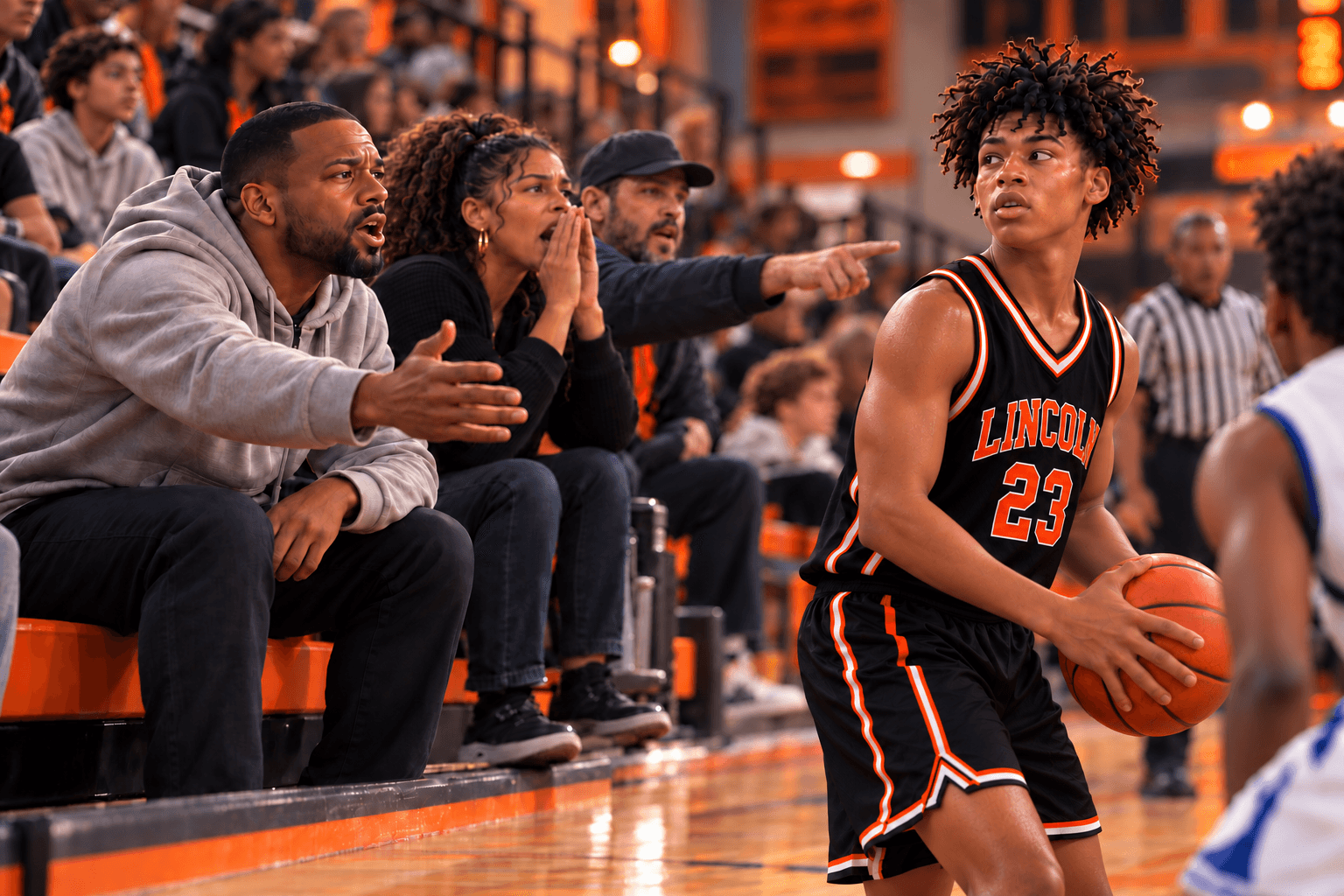
Watch a youth game closely and you may spot it: a kid makes a mistake and, before they even get back on defense, their eyes dart up to the bleachers. Looking for a parent. Checking a face.
That glance can mean a few things. One of them is worth looking at honestly: repeated instructions or visible reactions from the stands can teach a player to check the bleachers after mistakes — to play partly for the crowd instead of the game.
Why in-game coaching can backfire
It usually comes from a good place. You see something — they're not boxing out, they're dribbling into traffic, they're loafing back — and you call it out to help.
But here's what it can do to a young player in the moment:
They may be listening to two coaches. Yours and the actual coach's. When those two voices disagree — and they sometimes will — a kid can freeze, unsure who to follow.
They can start playing not to get yelled at. Instead of reading the game and reacting, they may reach for the choice that avoids a shout from the stands. That can make a player more tentative, right when they need to trust their instincts.
Every mistake can come with an audience check. A glance up after a turnover often isn't focus — it can be a kid bracing for a reaction. And a kid bracing for a reaction is a kid who's partly out of the play.
Even when the instruction is correct, shouting it from the stands can make things harder for a young player, not easier. In that moment, support usually helps more than coaching does.
What tends to help instead
Let the coach coach. Processing competing instructions during live play can be difficult for a young player. Giving them a clear chain of command — the coach runs the game, you're in their corner — takes a load off. If you disagree with the coaching, that's a quiet conversation with the coach another day, not a correction called over the kid's head mid-possession.
Cheer the effort, not the outcome. "Way to hustle back!" tends to land very differently than "You should've passed!" One can fuel a kid; the other can tighten them. Clap for the dive on the loose ball, the hard screen, the sprint back — the things in their control.
Give them one steady face in the crowd. When they glance up after a mistake, let what they find be calm — a nod, a clap. Not a wince, not a shout, not instructions. That steadiness can make it easier for them to let the mistake go and keep playing.
Pick a sideline rule for yourself. Some parents give themselves a simple job — "I cheer, I don't instruct." Whatever helps you stay supportive instead of directive.
Do this now
Next game, try a small experiment: hold the instructional comments for the whole game. Cheer effort, stay calm, and when your kid looks up, just nod. Then notice what you see — whether your player checks the stands less, looks more decisive, or stays with the next possession. Let what you observe guide the next game.
Let the coach coach. You've got a great seat — be the calm in it.
The free guide When the Pressure Comes From Home goes deeper, with a version for the player and one for the parent. It's part of Locked In, the young hooper's guide to the mental game.