
The Game Is 90% Mental. So Why Do We Only Train the 10%?
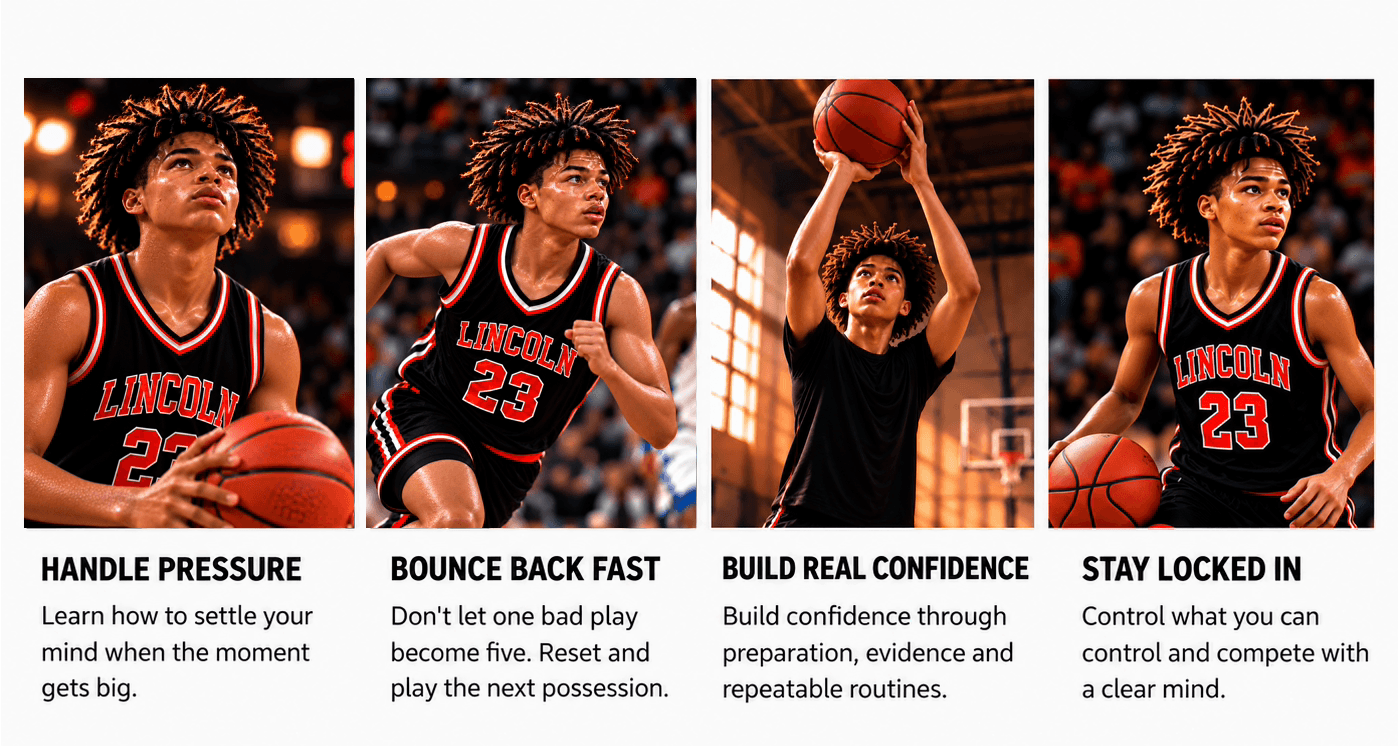
Malik had made the shot ten thousand times.
Empty gym, Saturday morning, nobody watching — top of the key, fifteen-footer, splash. He'd done it so many times the ball felt like part of his hand. So why, standing in the exact same spot with four seconds left against the team his whole season was measured against, did the rim suddenly look like a trash-can lid?
Nothing about the shot had changed. The rim was still ten feet high. The ball still weighed the same. His legs still worked. What changed was everything happening in his head around the shot — the defender's hand, the crowd on its feet, and one thought louder than the rest: don't miss.
He missed. And on the ride home he couldn't figure out why — because it was the same shot he never missed alone.
Basketball is played twice
Once with your body, and once in your head. And a lot of the time, the game in your head shapes the game on the floor.
Coaches like to say hoops is "90% mental." It's a saying, not a measurement — but any player who's ever bricked a wide-open shot in a big moment knows what it points at. And a lot of teams spend most of practice on the part you can see — the dribbling, the shooting, the footwork — while the harder-to-coach part (staying calm, playing with confidence, making good decisions when it's tight) gets less attention.
That's the gap worth paying attention to.
Talent is common. Composure is rarer.
Walk into most youth gyms and you'll find kids who can dribble, shoot, and jump. What's rarer is the player who can do those things when it's hard — down six, legs tired, a parent yelling from the bleachers, one shot to win it.
That player often isn't more talented. They're more locked in. They've worked on the part you can't see.
And being locked in doesn't mean never feeling the pressure. Even great players feel it before big games. Stephen Curry has described pressure as "an uneasy feeling" that hits him before big moments, something he has to settle into (Jackie MacMullan, "Rise above it or drown: How elite NBA athletes handle pressure," ESPN.com, May 29, 2019). Feeling it isn't the problem. Having nothing to do with it is.
Why this is a good bet for a young player
Two things make the mental game worth a young player's time:
- It's a skill, not a personality. Composure can be trained; "nervous player" doesn't have to become a permanent identity.
- It's under-trained. Because a lot of players and teams spend little time here, it's an area where steady work can set a player apart — not by getting taller or faster, but by staying composed when others don't.
What the mental game actually looks like
It's concrete, not fluffy. Things like:
- Letting a mistake go instead of carrying it into the next three possessions.
- Playing with some aggression early so the game comes to you instead of freezing up.
- Noticing your own body language before a coach reads it for you.
- Having something to do at the free-throw line when the moment gets big — a routine, a breath — instead of just hoping.
None of that requires another inch of height or a mile per hour of speed, and it supports the physical skills a player already has.
Do this now
Pick the one moment where your player's game tends to fall apart — the free-throw line, right after a turnover, the last two minutes of a close game. That's where the mental game is for. Start there, with one small tool, and build on it the way you'd build a jump shot: a little at a time.
A note for parents and coaches: the mental game is about composure and confidence, not a fix for everything. If a young player is dealing with worry or pressure that follows them off the court, that's a conversation for a trusted adult or a professional — not something a basketball routine is meant to solve.
Want the whole mental game in one place? Locked In is the young hooper's guide to winning it.